


When you finish a grueling workout, your muscles are depleted, your energy stores are empty, and your body is in a state of breakdown. Many fitness enthusiasts think that the real progress happens during the workout itself, but that is only half the story. The real transformation, tissue repair, and strength gains occur during the hours that follow your workout session. If you want to achieve your fitness goals safely and efficiently, mastering recovery techniques after sports training is absolutely essential.
Implementing proper recovery techniques after sports training allows your body to repair microscopic muscle tears, replenish glycogen stores, and restore fluid balance. Without a deliberate approach to recovery, your performance will inevitably plateau, and your risk of chronic injury will skyrocket. This comprehensive guide will walk you through the science, steps, and strategies of post-workout recovery so you can unlock your full athletic potential.
What is Recovery Techniques After Sports Training?
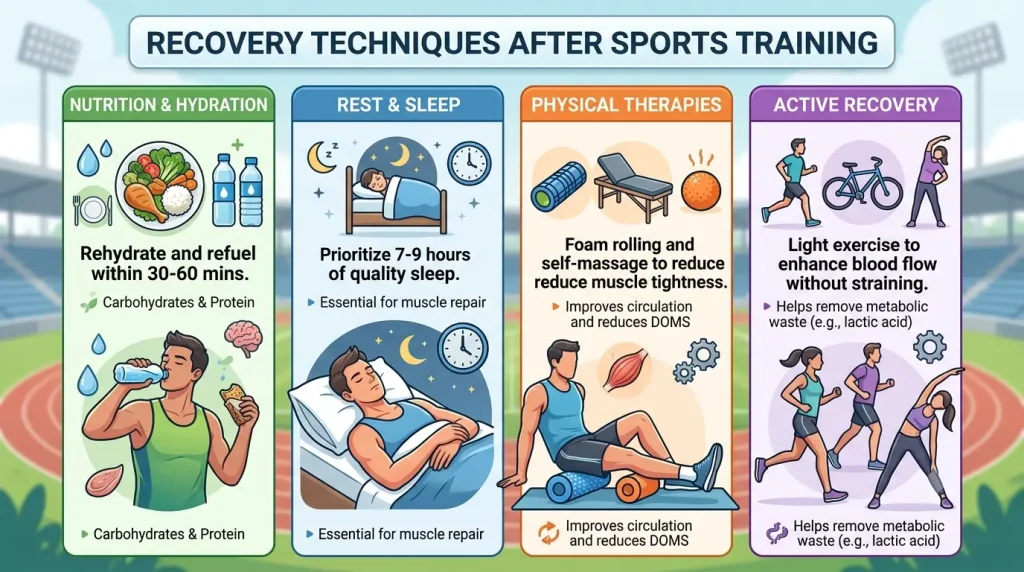
Recovery techniques after sports training refer to a systematic combination of physiological, nutritional, and psychological strategies designed to restore the body and mind to its baseline state following physical exertion. It is not merely sitting on the couch after a hard run; it is an active, multi-layered process.
These techniques encompass a wide variety of modalities, ranging from basic habits like hydration and deep sleep to advanced tools like compression garments and contrast water therapy. The primary objective is to transition the body from a catabolic state, where muscle tissue breaks down, to an anabolic state, where tissue undergoes repair and growth.
Why is Recovery Techniques After Sports Training Important?
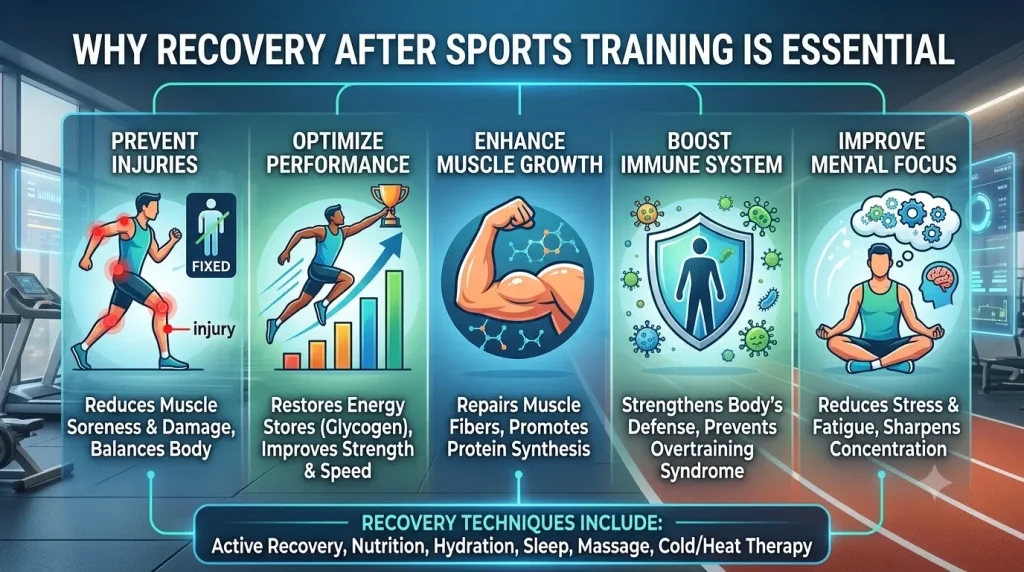
Every time you lift weights, sprint, or play a competitive sport, you place immense stress on your physical systems. Your muscles experience micro-tears, your central nervous system becomes fatigued, and stress hormones like cortisol spike. Without utilizing structured recovery techniques after sports training, your body remains in this stressed state, which slows down your progress.
Proper recovery is the bridge between hard work and actual results. It ensures that your muscles heal stronger than they were before, allowing you to handle greater training loads over time. Furthermore, consistent recovery helps regulate immune function, balances hormone production, and protects your joints and ligaments from overuse injuries.
Detailed Step-by-Step Guide to Post-Workout Recovery
Step 1: The Active Cool-Down Phase
Never stop moving abruptly after a high-intensity session. Spending 5 to 10 minutes walking, cycling at a very low resistance, or performing light mobility drills helps transition your heart rate back to its resting level. This low-intensity movement prevents blood pooling in your extremities and assists in flushing metabolic waste products out of your muscle tissues.
Step 2: Immediate Rehydration Strategies
Your body loses vital fluids and essential minerals through sweat during exercise. Within the first 30 minutes post-training, you need to prioritize fluid replacement. Drinking pure water is a good start, but adding electrolytes like sodium, potassium, and magnesium is crucial for restoring cellular balance and preventing painful muscle cramps.
Step 3: Targeted Nutritional Intake
Your muscles are highly receptive to nutrients immediately after exercise. To maximize the effects of recovery techniques after sports training, consume a balanced meal or shake containing high-quality protein and complex carbohydrates within 1 to 2 hours. Protein provides the amino acids needed to rebuild muscle tissue, while carbohydrates replenish your depleted glycogen energy stores.
Step 4: Myofascial Release and Soft Tissue Work
Using a high-density foam roller or a massage tool helps break up adhesions and knots in your muscles. Spend 10 to 15 minutes targeting major muscle groups like your quads, hamstrings, and upper back. This gentle pressure improves localized blood flow and enhances your overall range of motion.
Step 5: Prioritizing Quality Sleep
Sleep is the ultimate recovery mechanism. During deep sleep stages, your body releases a massive surge of human growth hormone, which is vital for tissue repair. Aim for 7 to 9 hours of uninterrupted sleep every single night to allow your nervous system and muscles to rebuild completely.
Benefits of Recovery Techniques After Sports Training
- Accelerated Muscle Repair: Speeds up the healing of micro-tears in muscle fibers, leading to faster muscle growth and adaptation.
- Reduced Muscle Soreness: Significantly decreases delayed onset muscle soreness, allowing you to return to training sooner without pain.
- Enhanced Athletic Performance: Consistent recovery ensures you can train at your maximum intensity during your subsequent sessions.
- Injury Prevention: Keeps your tendons, ligaments, and muscles supple, drastically lowering the risk of strains, sprains, and chronic overuse issues.
- Improved Mental Health: Lowers systemic cortisol levels, reducing stress, anxiety, and the psychological burnout often associated with intense training.
- Boosted Immune System: Prevents the immune suppression that typically follows intense, unrecovered physical exertion.
Disadvantages and Risks of Improper Recovery
- Increased Risk of Overtraining Syndrome: Failing to recover properly leads to chronic fatigue, persistent hormonal imbalances, and a severe drop in performance.
- Elevated Injury Rates: Exercising on unrecovered, tight muscles causes poor movement patterns, which frequently leads to acute joint and ligament injuries.
- Muscle Wasting: Without adequate nutritional recovery and rest, the body remains in a catabolic state, breaking down existing muscle tissue for energy.
- Sleep Disturbances: Overtraining caused by poor recovery can overstimulate the nervous system, making it incredibly difficult to fall or stay asleep.
- Weakened Immune Defense: Neglecting recovery leaves your body vulnerable to frequent colds, infections, and systemic illnesses.
Common Mistakes to Avoid in Post-Workout Recovery
One of the biggest mistakes beginners make is relying entirely on passive rest. Sitting completely still for days after a tough workout can actually cause your muscles to stiffen up and prolong your soreness. Active recovery, such as light walking or swimming, is far more effective for keeping blood flowing and speeding up the healing process.
Another major error is neglecting post-workout nutrition. Skipping meals or delaying your protein and carbohydrate intake leaves your body without the raw materials it needs to repair itself. Similarly, relying on energy drinks or sugary sodas for hydration will only dehydrate you further and disrupt your metabolic recovery.
FAQs
How long should recovery take after an intense sports session?
The timeline depends heavily on the intensity and duration of your workout. A standard strength training or cardio session generally requires 24 to 48 hours for localized muscle groups to recover completely. However, exceptionally intense events like marathons or heavy powerlifting sessions can require several days to a week for full systemic recovery.
Can I use active recovery techniques every single day?
Yes, gentle active recovery techniques can be performed daily. Activities like a leisurely 20-minute walk, a slow bike ride, or a gentle yoga flow do not place stress on the body. Instead, they promote circulation, reduce stiffness, and assist your natural healing systems without adding to your training fatigue.
Does cold water therapy actually help with muscle recovery?
Cold water therapy, such as an ice bath, is highly effective at reducing acute inflammation and numbing muscle pain immediately after a grueling workout. However, it should be used strategically. Because cold exposure suppresses the natural inflammatory response, using it too frequently can actually blunt long-term muscle growth adaptations.
What should I eat immediately after a heavy training session?
Your post-workout meal should lean heavily on a combination of fast-digesting protein and clean carbohydrates. Excellent examples include a whey protein shake with a banana, grilled chicken breast with brown rice, or Greek yogurt mixed with berries. This combination rapidly jumpstarts muscle protein synthesis and refills your glycogen stores.
How do I know if my body is fully recovered and ready to train again?
Listen to your body’s subtle signs. You are likely well-recovered if your resting heart rate is normal, your muscle soreness has dropped to a minimal level, your energy levels are high, and you feel mentally motivated to train. Persistent fatigue, irritability, and a lack of appetite are clear indicators that you need more rest.
Is stretching right after a workout safe for beginners?
Light static stretching right after a workout is safe and highly beneficial, provided you do not push past the point of mild tension. Since your muscles are already warm, stretching helps restore their resting length, reduces tension, and improves flexibility. Avoid bouncing or forcing a stretch, as this can cause muscle strains.
Expert Tips & Bonus Points
To get the most out of your recovery, try monitoring your resting heart rate every morning before getting out of bed. An elevated morning heart rate is a strong indicator that your nervous system is still recovering from your previous training sessions. If you notice your heart rate is 5 to 10 beats higher than usual, consider adjusting your training plan to a lighter active recovery day.
Additionally, pay close attention to your psychological state. Stress from work, relationships, or poor lifestyle habits uses the exact same recovery resources as physical stress. Incorporating mindfulness practices, such as 5 minutes of deep belly breathing right after your cool-down, can instantly shift your body out of “fight or flight” mode and accelerate your physical healing.
Conclusion
Mastering the right recovery techniques after sports training is the ultimate secret weapon for any athlete, beginner or advanced. Your progress is determined not just by how hard you push your body, but by how well you allow it to rebuild. By treating your recovery with the exact same dedication as your workouts, you will experience faster muscle growth, fewer injuries, and sustained physical energy.
Incorporate these habits step by step. Start by focusing on basic hydration and nutrition, and then gradually add active cool-downs and tissue rolling to your routine. Over time, these practices will become second nature, ensuring that you always show up to your next training session stronger, fresher, and completely ready to dominate.
