
Introduction
Starting soccer is exciting until you walk into a sports store and see dozens of cleats, balls, shin guards, socks, bags, training tools, and accessories. The good news is that soccer gear for beginners does not need to be complicated or expensive.
For your first practices and games, focus on equipment that helps you play safely, move comfortably, and develop basic skills. The core setup is much smaller than many beginners expect.
Under the standard Laws of the Game, players need a shirt, shorts, socks, shinguards, and footwear. Competition or league rules can add their own requirements, so always check the rules for your team before buying everything.
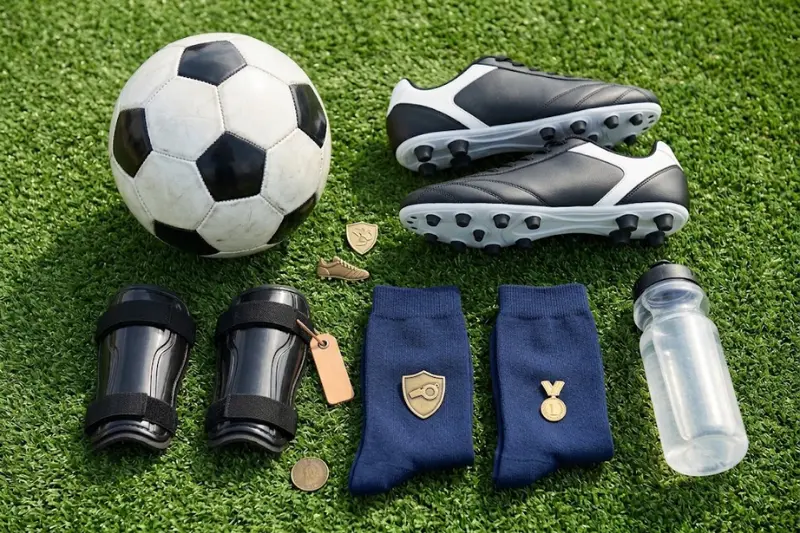
Quick Beginner Soccer Gear Checklist
If you are buying your first soccer kit, start with these essentials:
- Soccer cleats
- Shin guards
- Soccer socks
- Soccer ball
- Comfortable shorts and jersey
- Water bottle
- Soccer bag
- Ball pump
- Basic training equipment
You do not need professional-level equipment on day one. A comfortable pair of field-appropriate shoes, proper protection, a suitable ball, and clothing that allows you to move freely are enough to build a practical starter kit.
1. Soccer Cleats
Soccer cleats are one of the first purchases a new player should consider because your footwear affects how you move, accelerate, stop, and change direction.
The biggest mistake beginners make is choosing cleats based only on appearance. The better approach is to choose them according to the playing surface and fit.
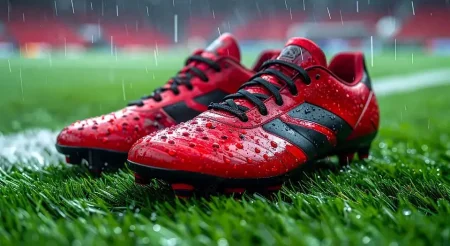
Choose Cleats for Your Playing Surface
Different soccer shoes are designed for different surfaces, including:
- Firm ground (FG): Common for natural grass fields.
- Artificial grass/turf: Designed for synthetic playing surfaces.
- Soft ground (SG): Made for softer or wet natural surfaces and typically uses removable or specialized studs.
- Indoor: Designed for flat indoor courts rather than grass.
Do not assume that one pair will be ideal everywhere. Your league, school, or local facility may also have specific footwear rules.
How Should Beginner Cleats Fit?
Beginner cleats should feel secure and comfortable without creating painful pressure points.
Your heel should stay reasonably stable when you walk and change direction. Your toes should not be crushed against the front of the shoe, but the shoe should also not be so loose that your foot slides around.
For younger players, avoid buying a dramatically oversized pair simply to make it last longer. Excess movement inside the shoe can make it harder to control your movements.
A simple rule is:
Comfort and correct fit matter more than having the newest or most expensive model.
2. Shin Guards
If there is one piece of protective equipment beginners should not treat as optional, it is the shin guard.
Under IFAB’s Laws of the Game, shinguards are compulsory and must be made from suitable material, provide reasonable protection, and be covered by the socks.
Shin guards help protect the lower legs from contact with another player’s foot, studs, or the ball.
What Should Beginners Look for in Shin Guards?
Look for shin guards that:
- Fit the player’s lower leg properly
- Stay in place while running
- Provide reasonable protection
- Do not significantly restrict movement
- Feel comfortable underneath soccer socks
There are several styles, including simple slip-in guards and versions with additional ankle protection. Beginners do not necessarily need the most advanced design.
The important thing is that the guards fit properly and meet your competition’s requirements.
3. Soccer Socks
Soccer socks are more than part of the uniform. They are designed to cover the shin guards and stay in place during movement.
Because shinguards are worn underneath the socks, choose socks that are long enough to cover them completely. IFAB’s current rules specifically require shinguards to be covered by the socks.
What Makes a Good Pair of Soccer Socks?
For beginners, look for:
- A comfortable fit around the foot and calf
- Enough length to cover the shin guards
- Breathable material
- A secure fit that does not constantly slide down
- Enough thickness to work comfortably with your cleats
You do not need expensive specialty socks to begin playing. A well-fitting standard soccer sock is usually enough for a new player.
4. A Properly Sized Soccer Ball
A soccer ball is essential if you want to practice outside scheduled team sessions.
The right ball size matters, particularly for younger players. Soccer balls are available in different sizes, and the correct choice depends on the player’s age group and the rules of the team or competition.
A beginner should not automatically buy a size 5 ball simply because it is the standard adult size. Check the age-group requirements before purchasing.
Training Ball vs. Match Ball
Beginners may also notice that stores sell training balls and match balls.
A training ball is often the more practical choice for regular practice because it is intended for repeated use. A match ball may be required for particular competitions, but you generally do not need an expensive match-level ball just to learn basic dribbling, passing, and shooting.
Recent beginner equipment guides similarly emphasize starting with a properly sized ball rather than buying a large collection of advanced equipment.
5. Comfortable Soccer Clothing
You need clothing that allows you to run, turn, stretch, and kick without feeling restricted.
For most beginners, that means:
- A soccer jersey or comfortable athletic shirt
- Soccer shorts or athletic shorts
- Soccer socks
- Weather-appropriate layers when necessary
You do not have to buy a professional replica jersey to start playing.
If you are joining an organized team, check whether the coach or league requires a specific uniform. Otherwise, prioritize comfort, freedom of movement, and suitable material.
A breathable shirt can be particularly useful during longer practices or hot weather because you will spend much of the session moving continuously.
6. Water Bottle
A water bottle is a simple piece of gear, but it is easy to forget when preparing for your first practice.
Bring enough water for the expected duration and conditions of your session, and follow any instructions from your coach or facility.
A reusable bottle is convenient because it can be used for practices and games without repeatedly buying disposable bottles.
Look for a bottle that:
- Does not leak inside your bag
- Is easy to open during breaks
- Is large enough for your normal session
- Is easy to clean
You do not need a specialized sports bottle. A reliable bottle that you will actually carry is the better choice.
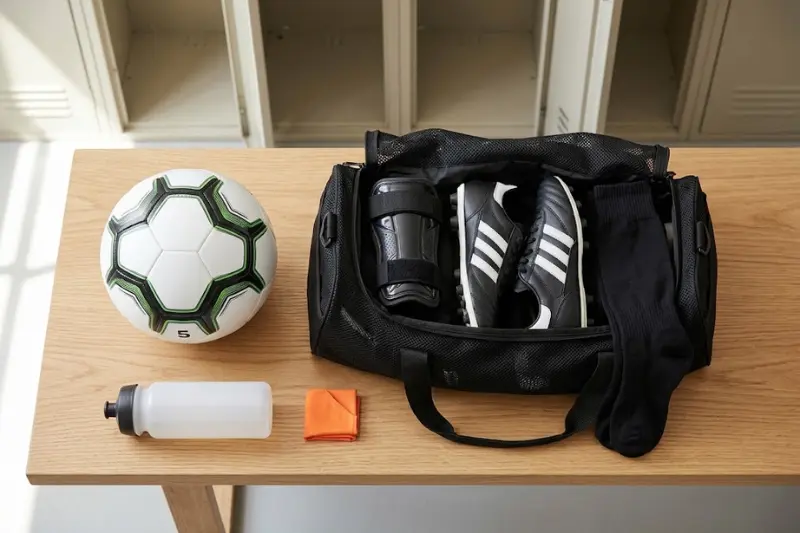
7. Soccer Bag
A dedicated soccer bag makes it much easier to keep your equipment together.
Without one, cleats, socks, shin guards, water bottles, and clothing can quickly become scattered between different bags.
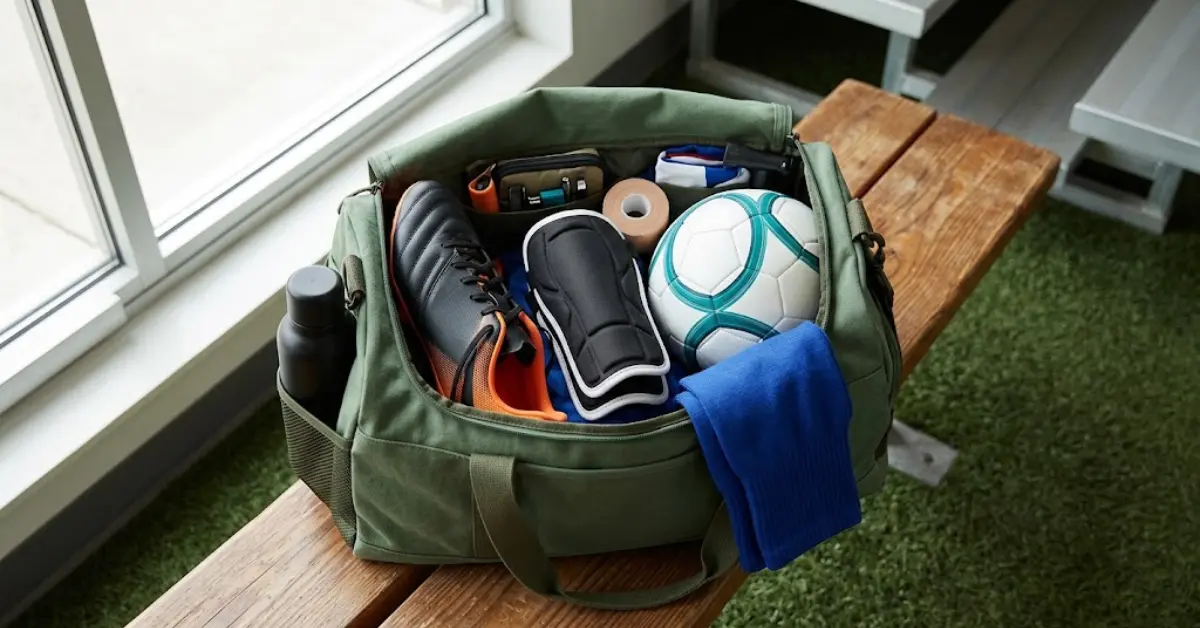
A beginner does not need a huge professional equipment bag. A basic backpack or compact sports bag can work well if it fits your essentials.
A useful beginner setup might contain:
- Cleats
- Shin guards
- Soccer socks
- Water bottle
- Training clothes
- Soccer ball, if the bag has enough space
- Small towel
- Spare shirt
Keeping everything together also makes it easier to check your equipment before leaving for practice.
8. Ball Pump
A soccer ball is not very useful if it is constantly underinflated, so a small ball pump is worth keeping in your gear bag.
You do not need an expensive pump. A basic hand pump with a suitable needle attachment is enough for most beginners.
Before inflating the ball, check the manufacturer’s recommended pressure printed on or near the ball. Avoid simply pumping it until it feels extremely hard. Proper inflation helps the ball behave more predictably when passing, dribbling, and shooting.
A compact pump is especially useful because pressure can change over time and after repeated use.
9. Basic Training Equipment
You can improve a lot with nothing more than a ball and an open space, but a few simple training items can make practice more structured.
Useful beginner equipment includes:
- Training cones for dribbling and change-of-direction drills
- Flat markers for creating practice areas
- Agility ladders for footwork exercises
- Small training hurdles for movement drills
- A rebounder for practicing passes and first touches
You do not need to buy all of these at once.
For a new player, a ball and a few inexpensive cones can already support many basic exercises. You can create dribbling courses, passing targets, turning drills, and shooting stations without building a full training setup.
The best equipment is the equipment you will actually use.
What Soccer Gear Do Beginners Actually Need?
If your budget is limited, prioritize your purchases rather than buying every accessory you see.
| Gear | Priority | Why it matters |
|---|---|---|
| Soccer cleats | Essential | Provides appropriate traction for the playing surface |
| Shin guards | Essential | Required protective equipment |
| Soccer socks | Essential | Covers the shin guards and completes the basic kit |
| Soccer clothing | Essential | Allows comfortable movement |
| Soccer ball | Very useful | Makes independent practice possible |
| Water bottle | Very useful | Keeps water available during sessions |
| Soccer bag | Useful | Keeps equipment organized |
| Ball pump | Useful | Maintains appropriate ball inflation |
| Cones/markers | Optional | Adds structure to individual training |
| Advanced training tools | Optional | Useful after basic skills develop |
This approach prevents one of the most common beginner mistakes: spending too much money on equipment before knowing what you actually need.
How Much Should You Spend on Beginner Soccer Gear?
There is no single amount that every new player needs to spend.
Your total cost depends on what you already own, whether you are playing casually or competitively, the required uniform, the playing surface, and the quality level you choose.
A sensible strategy is to divide your purchases into three groups.
Buy First
Start with equipment required for participation and protection:
- Appropriate cleats
- Shin guards
- Soccer socks
- Required team clothing
Buy Next
Add equipment that makes regular practice easier:
- Soccer ball
- Water bottle
- Soccer bag
- Ball pump
Buy Later
Only add training accessories when you know you will use them:
- Cones
- Agility equipment
- Rebounders
- Specialized training aids
This keeps your first purchase practical instead of turning it into an unnecessarily expensive shopping list.
Common Beginner Soccer Gear Mistakes
Buying soccer equipment for the first time can be confusing. These mistakes are easy to avoid.
Buying Cleats Without Checking the Surface
A shoe that works well on one surface may not be the right choice for another.
Check where you will normally play before choosing your cleats.
Choosing Appearance Over Fit
A stylish pair of cleats is not helpful if they hurt your feet.
Comfort, stability, and an appropriate fit should come before color or design.
Buying Oversized Equipment for Children
Parents sometimes buy much larger equipment because they expect the player to grow into it.
That can be problematic with items such as footwear and protective equipment. Equipment should be appropriate for the player’s current size and the team’s requirements.
Buying Too Many Training Accessories
A new player does not need a complete professional training setup.
Start with a ball and basic equipment. Add training aids when they solve a specific practice need.
Forgetting League or Team Rules
Your personal preferences do not always determine what is permitted in organized soccer.
A team may specify requirements for uniforms, equipment, footwear, ball sizes, or protective gear.
Check with the coach, club, school, or competition before making purchases that depend on specific rules.
How to Choose Soccer Gear for a Child Beginner
Children need the same basic categories of equipment as adult beginners, but fit and age-group requirements become especially important.
Start by checking the child’s:
- Age group
- Playing surface
- Required ball size
- Uniform requirements
- Shin-guard requirements
- Footwear needs
Do not assume that equipment designed for an adult player is appropriate for a child.
For younger players, comfort can also affect whether they enjoy training. Shoes that pinch, socks that constantly fall down, or shin guards that move around can turn an otherwise enjoyable practice into a frustrating experience.
A simple, properly fitted kit is usually a better starting point than an expensive collection of advanced gear.
Soccer Gear for Practice vs. Match Day
Your training equipment and match-day equipment do not have to be identical.
During practice, you may use:
- Training ball
- Cones
- Rebounder
- Extra clothing
- Water bottle
- Training shoes appropriate for the surface
For an organized match, you may need:
- Approved team uniform
- Appropriate footwear
- Shin guards
- Required socks
- Any additional equipment specified by the competition
This distinction is useful because beginners sometimes purchase equipment for situations they will rarely encounter.
Before match day, follow your team’s instructions rather than relying on a generic checklist.
What Should You Pack in a Beginner Soccer Bag?
A simple pre-practice checklist can prevent forgotten equipment.
Before Leaving Home
Check for:
- Cleats
- Shin guards
- Soccer socks
- Jersey and shorts
- Water bottle
- Soccer ball if required
- Ball pump
- Towel
- Weather-appropriate layer
If you use additional training equipment, add it according to the session.
Keeping a consistent packing routine is more useful than carrying unnecessary equipment.
How to Take Care of Your Soccer Gear
Good equipment can last longer when you take basic care of it.
Clean Your Cleats
Remove dirt and grass after playing. Let them dry naturally rather than leaving them wet and dirty inside your bag.
Air Out Your Gear
After training, take clothing, socks, and protective equipment out of the bag instead of leaving everything sealed inside.
Check Your Shin Guards
Look for cracks, significant damage, or problems with straps and fasteners. Replace damaged protective equipment when necessary.
Maintain Your Ball
Keep the ball clean and check its inflation before practice. Follow the manufacturer’s instructions for pressure and care.
Keep Your Bag Organized
A consistent place for each item makes it much easier to notice when something is missing.
What is the most important soccer gear for a beginner?
The most important items are appropriate soccer cleats, shin guards, soccer socks, and suitable playing clothes. A properly sized soccer ball is also highly useful for practice.
Do beginners need expensive soccer cleats?
No. Beginners do not need professional-level cleats. Prioritize the correct surface, comfortable fit, and appropriate construction rather than the highest price.
Do you need shin guards to play soccer?
Shin guards are required under the Laws of the Game. They must meet the applicable requirements and be covered by the socks. Local competitions can also have additional rules.
What size soccer ball should a beginner use?
The correct ball size depends on the player’s age group and competition requirements. Check with the club, coach, school, or league before buying one.
Can you play soccer without soccer cleats?
For casual play, the appropriate footwear depends on the playing surface and local rules. For organized soccer, follow the competition’s footwear requirements. On grass or other outdoor surfaces, suitable soccer footwear can provide traction that ordinary sneakers may not.
Do beginners need soccer training equipment?
Not necessarily. A soccer ball and some open space are enough for many basic skills. Cones and other training tools can be added later when they make practice more structured.
The Best Beginner Setup Is Simple
Starting soccer does not require a huge equipment budget. Get the essentials right first: suitable footwear, shin guards, socks, comfortable clothing, and a properly sized ball.
Then add practical items such as a water bottle, bag, and pump. Training accessories can come later as your skills and practice routine develop.
The goal of your first soccer kit is not to own the most equipment. It is to have the right equipment to play safely, comfortably, and consistently.
Soccer Gear Bor Beginners